Does Pressure Washing Damage Vinyl Siding? An Honest Answer
Published June 9, 2026
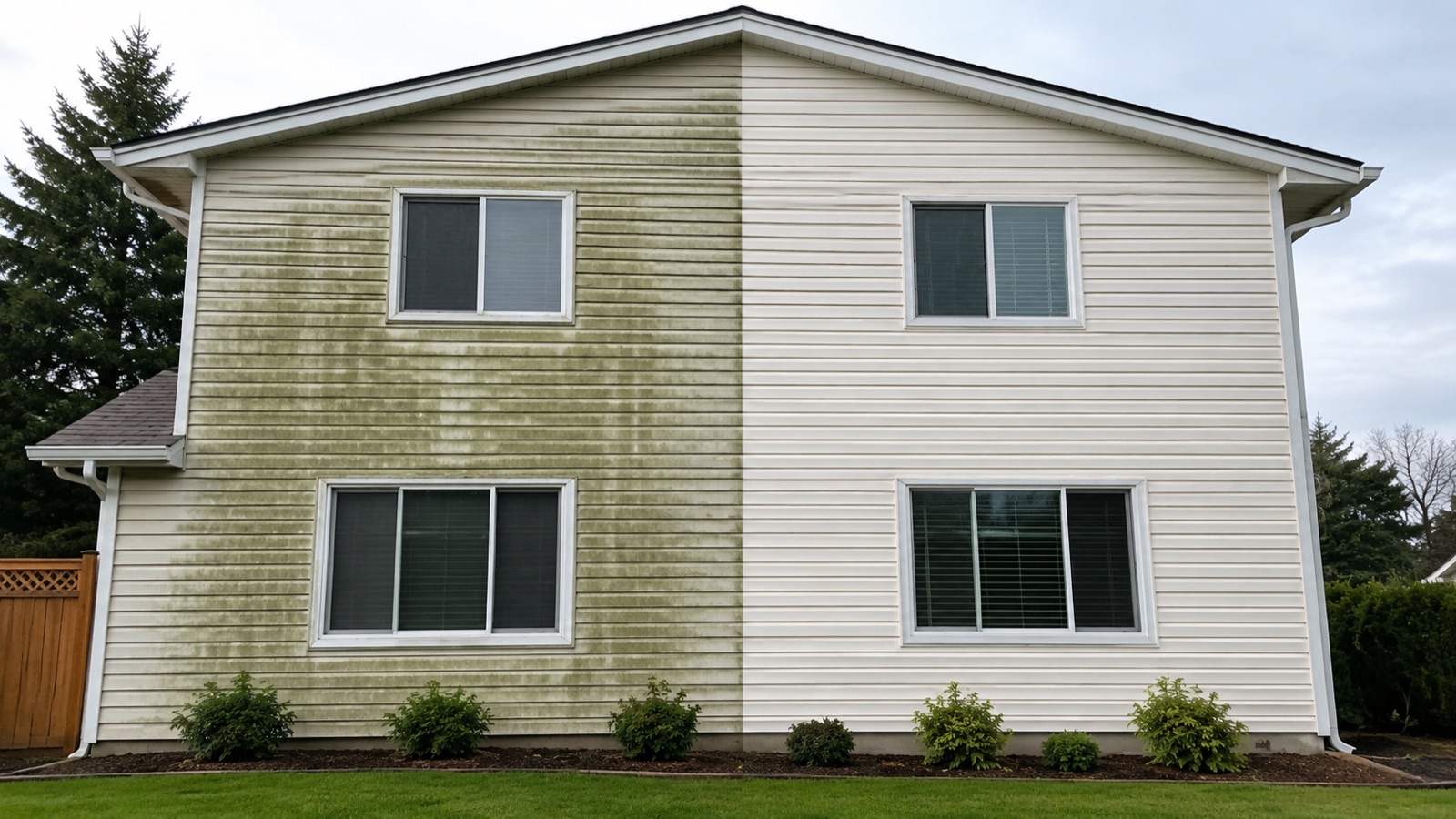
If you've winced watching someone drag a pressure washer across your siding, or you've already lived through cracked panels and stains behind the wall, this question isn't academic. You want a straight answer before you let anyone near your home again. Here it is: yes, pressure washing can damage vinyl siding. But the damage comes from the method and the operator, not from the act of cleaning. Done right, washing your siding is safe and routine. This guide covers how vinyl gets damaged, why the safer method exists, and how to vet a contractor.
Key Takeaways
- Yes, pressure washing can damage vinyl siding, mainly by forcing water behind the panels, cracking them, or stripping the finish.
- The damage comes from excessive pressure and poor technique, not from cleaning itself.
- Vinyl should be soft washed (under 500 PSI plus cleaning solution), not blasted at 1,500-4,000 PSI.
- The most dangerous damage, water trapped inside the wall, often stays hidden until mold or rot appears later.
- A few simple questions tell you whether a contractor knows how to clean vinyl safely.
Does Pressure Washing Damage Vinyl Siding?
Pressure washing can absolutely damage vinyl siding, but the real culprit is too much pressure aimed the wrong way, not the cleaning itself. Vinyl is durable in everyday weather, yet it's still a thin, flexible panel system designed to shed water from the outside. Hit it with a concentrated high-PSI stream at the wrong angle and you can crack it, drive water behind it, or strip its finish, often costing more to fix than the wash ever saved.
So the honest framing isn't "good or bad." It's "right method or wrong method." Vinyl should be cleaned with a soft wash: low pressure, under 500 PSI, plus a cleaning solution that kills algae and lifts grime. That gets siding cleaner and keeps it clean longer. Our guide on soft wash vs. pressure wash breaks down which method fits which surface.
How Vinyl Siding Actually Gets Damaged
Understanding the specific failure modes is what lets you tell a careful contractor from a reckless one. Here's what goes wrong under too much force.
Water Forced Behind the Panels
This is the worst one because you can't see it happen. Vinyl hangs in overlapping, vented courses; water is meant to run down the face and escape through weep holes at the bottom. Aim a high-pressure stream upward or into a seam and you drive water behind the siding, into the wall cavity, where it feeds mold and rots the wall from the inside. And the damage is delayed, nothing looks wrong the day of the wash, but months later you find interior mildew or soft sheathing, and almost no one connects it back to the cleaning. That hidden, downstream damage is the biggest reason to take vinyl washing seriously.
Cracked, Chipped, or Punctured Panels
Vinyl gets more brittle as it ages and in cold weather. A close-range, high-pressure blast, especially in winter, can crack or chip a panel outright. A cracked panel lets water in and usually has to be replaced, and matching weathered siding to old panels is notoriously hard.
Stripped Finish and Chalky Streaking
Older vinyl develops a faint chalky layer of oxidation. High pressure can blast it off unevenly, leaving blotchy, lighter streaks where the wand lingered, the siding equivalent of over-sanding one spot. The result looks worse than before it was "cleaned," with no easy fix short of painting.
Lifted, Loosened, or Dislodged Panels
Vinyl panels lock together and flex with temperature. Jam a wand under a course or hit a seam dead-on and you can unclip, lift, or knock panels loose, which breaks the water-shedding system and invites the moisture problem above.
Citation capsule: Vinyl siding is installed as overlapping, vented panels engineered to shed water from the exterior face. High-pressure washing can force water behind the panels into the wall cavity, crack brittle or aged vinyl, strip oxidized finishes, and dislodge interlocked courses, failure modes driven by excessive pressure and poor technique, not by cleaning itself.
Why Soft Washing Is the Right Way to Clean Vinyl
Soft washing avoids every failure mode above by trading force for chemistry. Instead of blasting grime off with raw pressure, it applies a cleaning solution at low pressure, under 500 PSI, closer to a strong garden hose than an industrial jet. That low pressure can't drive water behind the panels, crack them, or strip the finish, so the risks above don't apply. And because the solution kills the algae and mildew at the root rather than knocking off the visible layer, soft-washed siding stays clean longer, which matters in the Pacific Northwest, where shaded north-facing walls reload with algae fast.
If You Got Burned Before, Here's What Probably Went Wrong
When a vinyl-washing job goes bad, it's rarely a freak accident, it's usually one of a few predictable mistakes: too much pressure with no cleaning solution, the wrong angle (spraying upward or into seams), holding the wand too close, or washing aged, brittle vinyl on a cold day. None of these mean your home is fragile. They mean the method was wrong, fixable by choosing differently next time.
How to Vet a Contractor So It Doesn't Happen Again
You don't need to become an expert, just ask a few questions that separate the careful pros from the blast-and-go crowd. Before you hire anyone for your siding, ask:
- "Do you soft wash siding, or pressure wash it?" The right answer is soft wash, low pressure plus a cleaning solution. If they describe blasting it with high pressure, keep looking.
- "How do you keep water from getting behind the panels?" A pro will mention low pressure, a downward spray angle, and not jamming the wand into seams.
- "What do you use on the algae and mildew?" You want to hear that a cleaning solution does the work, that's what makes the result last.
- "How do you protect my plants and landscaping?" Careful operators pre-wet greenery and manage runoff.
- "Can I see before-and-after photos of vinyl you've cleaned?" Real, surface-specific examples beat vague promises.
You're listening for one thing: do they respect that vinyl is a water-shedding system to be cleaned gently, or do they treat every surface like a concrete slab?
Frequently Asked Questions
So is it ever safe to pressure wash vinyl siding?
The cleaning is safe when it's actually a soft wash, low pressure under 500 PSI plus a cleaning solution. What's risky is true high-pressure washing (1,500-4,000 PSI) aimed at thin, flexible vinyl. Save real pressure washing for hard surfaces like concrete.
Can pressure washing cause mold inside my walls?
Indirectly, yes. If high pressure forces water behind the panels into the wall cavity, that trapped moisture can feed mold and rot, often hidden for months. Low-pressure soft washing doesn't drive water behind the siding, which is exactly why it's safer.
How can I tell if my siding was already damaged by a bad wash?
Look for cracked or chipped panels, blotchy lighter streaks where the finish was stripped, panels that have lifted or come unclipped, and any musty smell or interior mildew that showed up afterward. The hidden water damage is hardest to spot, so if you suspect it, look closer inside the wall.
How often should I have my vinyl siding cleaned?
For most Pacific Northwest homes, about once a year, more often if your home is heavily shaded or under conifers. We cover how to read your home's growth in how often to wash your house in the PNW.
Clean Siding Without the Gamble
So, does pressure washing damage vinyl siding? It can, with too much force, the wrong angle, and no respect for how siding is built. But that's a method problem, not a reason to leave your home dirty. Soft washing cleans vinyl thoroughly and safely, and keeps the algae away longer.
If a past bad experience made you gun-shy, that's fair. Cascade Clean Pros does owner-operated, soft-wash house washing across King and Snohomish Counties, matched to each surface, never high pressure on your siding. We're happy to walk your home, explain what we'd do, and give you an honest, free estimate. Call or text (360) 202-7249.