Moss Damage and Your Roof: What Pacific Northwest Homeowners Need to Know
Published June 6, 2026
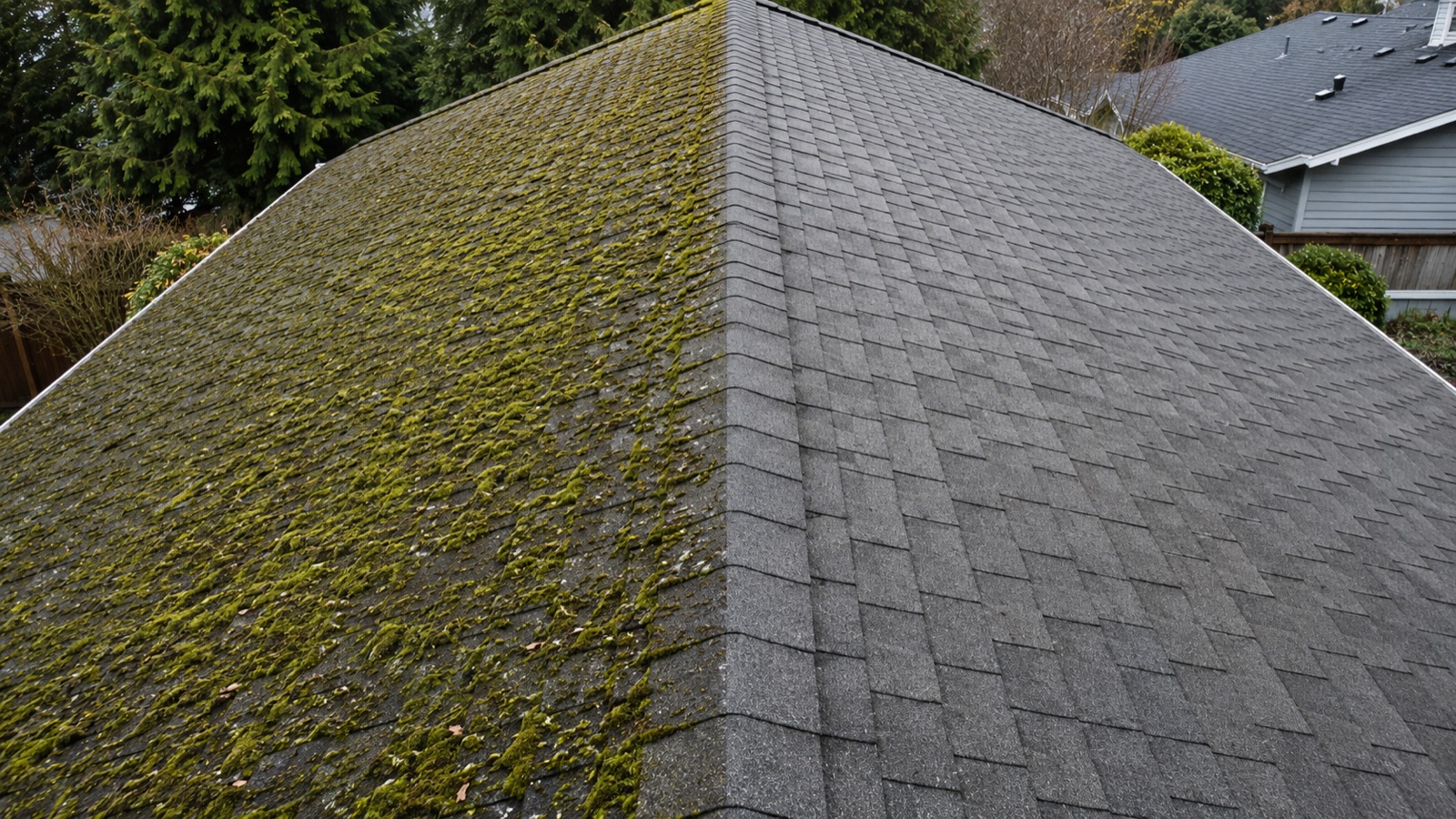
That green fuzz creeping across your north-facing shingles isn't just an eyesore. In the Pacific Northwest, where damp shade and mild winters create near-perfect growing conditions, roof moss is one of the most common and most misunderstood threats to a home's roof. The hard part: learning how to remove moss from a roof safely, because the wrong method can do more damage than the moss itself. Most homeowners think of moss as a stain. It isn't. It's a living plant anchoring itself into the seams of your roof, and the way it grows is exactly what makes it destructive.
Key Takeaways
- Moss roots (rhizoids) physically lift and separate shingles, so the damage is structural, not cosmetic.
- High pressure washing strips protective granules and voids many shingle warranties; never use it on a roof.
- DIY options like zinc strips and brushing have real limits and safety risks.
- Low-pressure soft washing is the method professionals use to kill moss without harming shingles.
Why Is Moss So Common on Pacific Northwest Roofs?
Moss thrives here because our climate hands it everything it needs: long wet seasons, mild temperatures, abundant shade, and tall conifers that keep roofs damp and drop organic debris. North and east-facing roof slopes stay shaded longest, so they grow moss first. Add the region's persistent moisture, and a clean roof can host visible growth within a couple of seasons.
Moss isn't a true root plant. It spreads through spores carried on wind and rain, then anchors with thread-like structures called rhizoids. Those rhizoids don't feed the plant the way roots do, but they grip aggressively. On a Northwest roof shaded by Douglas fir or cedar, moss finds steady moisture and a thin layer of trapped debris to colonize.
Citation capsule: Moss reproduces through airborne spores rather than seeds, anchoring to surfaces with rhizoids instead of true roots, according to standard botanical descriptions of bryophytes. In the Pacific Northwest's wet, shaded climate, this lets moss colonize roof seams within a few damp seasons.
How Does Moss Actually Damage a Roof?
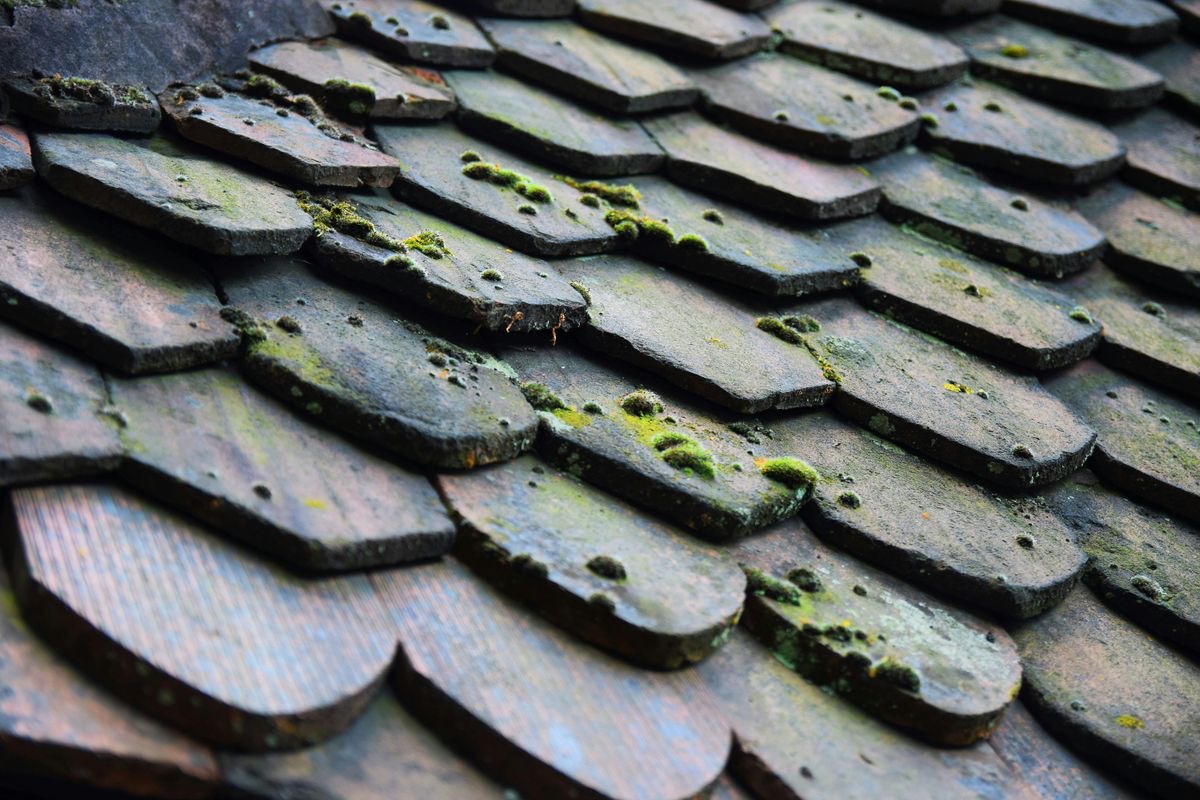
Moss damages a roof from below, not just on the surface. As rhizoids work into the gaps between shingles, the moss mat lifts and separates shingle edges, breaking the weather seal. That lifting is the core problem: it's mechanical, structural damage, not a stain you can wipe away. Once edges lift, water gets underneath.
Most homeowners treat moss as a discoloration problem and reach for whatever cleans the surface. That framing is exactly backward. The visible green is the least of it. The harm happens in the seams you can't see, where rhizoids are slowly prying shingles apart and creating a wick for moisture.
Trapped Moisture and Rot
A moss mat acts like a sponge. It holds water against the roof surface long after the rain stops, which is the last thing a roof needs in a climate that's already wet most of the year. Constant dampness shortens the life of asphalt shingles, encourages wood rot on cedar, and keeps the roof deck from drying. Trapped moisture under lifted shingles is how small moss problems become leaks.
Granule Loss and Lifted Edges
Asphalt shingles rely on a layer of mineral granules for UV and weather protection. As moss expands and contracts with wet and dry cycles, it loosens those granules and pulls at shingle edges. Over time you get bare spots, curling, and gaps. Each lifted edge is an entry point for wind-driven rain.
How Do You Remove Moss From a Roof Safely?
The safest way to remove moss from a roof is low-pressure treatment that kills the moss and lets it release, never high-pressure blasting that strips the shingle. This is the single most important point for any homeowner: pressure is the enemy. High-pressure washing removes the protective granules along with the moss, and many shingle manufacturers' warranties specifically discourage pressure washing for that reason.
In our work across King and Snohomish County roofs, the most damaged shingles we see aren't the ones with the heaviest moss. They're the ones someone already power-washed. The moss grows back, but the stripped, granule-bare shingle never recovers. The cleanup did the harm.
The right approach is patient, not aggressive. A roof-safe treatment solution is applied at low pressure, given time to work, and the moss is allowed to die and weather off naturally over the following weeks. Scrubbing and blasting feel productive but trade short-term appearance for long-term roof life.
Citation capsule: High-pressure washing can dislodge the protective mineral granules that shield asphalt shingles from UV and weather, which is why many shingle manufacturers' warranty guidance discourages pressure washing. Low-pressure, chemistry-based moss treatment removes growth without that abrasive damage.
Do DIY Moss Treatments Actually Work?
DIY moss treatments can work, but each common method carries real limits and safety risks worth understanding before you climb a ladder. Roofs are steep, slick when wet or treated, and unforgiving in a fall. Here's an honest look at the popular options and where each one falls short.
Zinc and Copper Strips
Zinc and copper strips installed near the ridge release metal ions when it rains, which discourages new moss as the runoff washes down. The honest limits: they're preventive, not a cure. Strips do nothing for moss you already have, their effect weakens farther down the slope, and on a long or complex roof, coverage can be uneven. Think of them as slowing regrowth, not solving an active problem.
Dry Brushing and Scraping
Manually brushing or scraping moss is tempting because it gives an instant visible result. The problem is that brushing pulls at the same shingle edges the moss already loosened, and aggressive scraping knocks off granules. You also leave the rhizoids behind in the seams, so it grows back. And brushing means standing on a steep, often wet roof, which is the highest-risk part of the whole job.
Bleach and Sodium Hypochlorite Solutions
Diluted sodium hypochlorite (the active ingredient in chlorine bleach) is what most professional soft-wash solutions are built around, so the chemistry itself is legitimate. The DIY risk is in the handling. Wrong concentrations can damage plants, stain siding, harm gutters, and hurt you. Runoff has to be managed so it doesn't kill landscaping or reach storm drains. Mixing strong solutions and applying them safely on a roof is harder and riskier than it looks.
Does Roof Type Change How You Treat Moss?
Yes, roof material matters, because asphalt, cedar shake, and metal each respond differently to moss and to cleaning. The shared rule holds across all three: low pressure, roof-safe chemistry, and no aggressive scraping. But the details differ enough to be worth knowing before you treat your specific roof.
Asphalt Shingles
Asphalt is the most common Northwest roof and the most vulnerable to pressure damage. The granule layer is everything, so the priority is killing moss without disturbing those granules. Soft, low-pressure application with a roof-safe solution is the standard, and letting the dead moss weather off beats scrubbing it.
Cedar Shake
Cedar is organic, so moss and the moisture it traps can feed actual wood rot. Cedar also can't take harsh scrubbing or high pressure without splintering and gouging. Gentle, properly diluted treatment matters even more here, because the goal is to dry the wood out and stop the rot cycle, not soak it further.
Metal Roofs
Metal roofs resist moss better, but it still grows in seams, valleys, and wherever debris collects. The good news is metal won't lose granules. The caution is finish and coating: gentle, low-pressure cleaning protects the protective coating and prevents scratches that lead to corrosion down the road.
FAQ
Can I just leave moss on my roof?
Leaving moss lets it keep lifting shingle edges and trapping moisture, which shortens roof life and invites leaks. In the wet Pacific Northwest, moss rarely stays small on its own. Treating it early is far cheaper than repairing rot or replacing a roof that failed sooner than it should have.
Will moss come back after treatment?
Often, yes, because PNW conditions constantly reseed roofs with airborne spores. A proper treatment kills the current growth, but ongoing prevention matters. Keeping the roof clear of debris, trimming overhanging branches for more sun, and periodic re-treatment all slow regrowth. No single treatment makes a Northwest roof permanently moss-proof.
Is pressure washing ever okay on a roof?
No, not on shingles. High pressure strips the protective granules from asphalt, splinters cedar, and can force water under shingles, and many shingle manufacturers' warranty guidance discourages it. Roofs should be cleaned with low-pressure soft washing. Save pressure washing for hard surfaces like concrete driveways, not roofing.
How often should a PNW roof be treated for moss?
It depends on shade, surrounding trees, and roof material, so there's no single number. Heavily shaded roofs under conifers regrow moss faster than open, sunny ones. The practical answer is to inspect annually and treat when growth reappears, rather than waiting for a thick mat to form.
| Roof type | Main moss risk | Recommended care |
|---|---|---|
| Asphalt shingle | Granule loss and lifted edges as moss expands and contracts | Low-pressure soft wash; let the dead moss weather off — never high pressure |
| Cedar shake | Trapped moisture feeds wood rot; splinters under pressure | Gentle, properly diluted treatment to dry the wood out — no scrubbing |
| Standing-seam metal | Growth in seams and valleys; coating scratches lead to corrosion | Low-pressure cleaning that protects the finish; no granules to lose |
Protect Your Roof Before the Damage Adds Up
Moss is a slow problem that becomes an expensive one. The longer it sits, the more it lifts shingles, traps moisture, and shortens the life of a roof you'd rather not replace early. The reassuring part: caught in time, moss is very manageable, and the safe method is well understood. Low pressure, roof-safe chemistry, patience, and respect for how the plant actually grows.
If your Northwest roof is going green, Cascade Clean Pros offers soft-wash roof cleaning and moss treatment across King and Snohomish Counties, soft wash only, never high pressure on your shingles. We're happy to take a look and give you an honest, free estimate. Call or text (360) 202-7249.