Soft Wash vs. Pressure Wash: Which Method Is Right for Your Home?
Published June 6, 2026
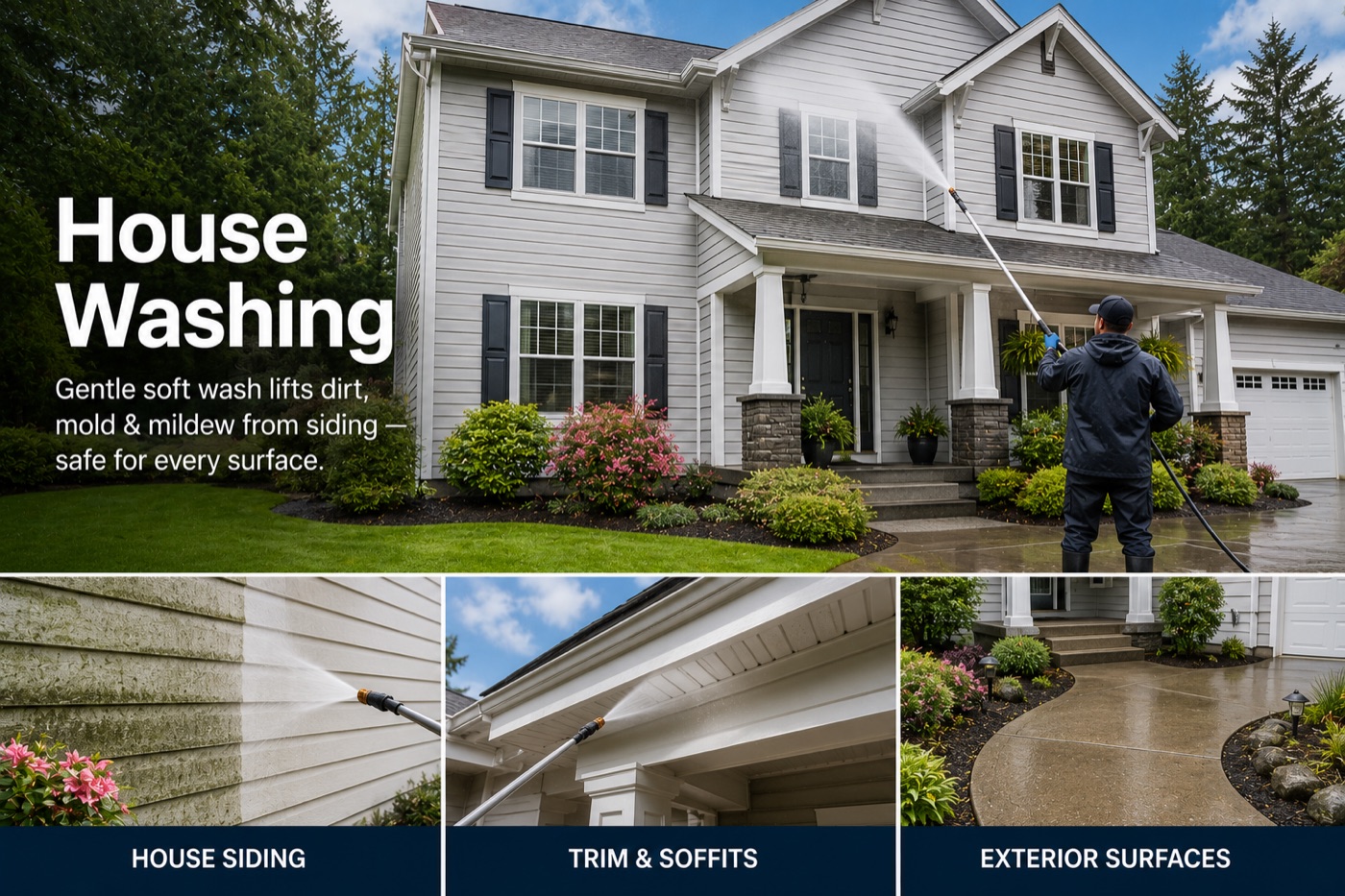
The choice between soft wash vs pressure wash isn't really about which one is "stronger." It's about matching the method to the surface and to the kind of grime you're fighting. Here in the Pacific Northwest, most of what darkens a roof or streaks siding is living: moss, algae, lichen, and mildew. That changes everything. Biological growth needs the right cleaning solution to kill it, not just brute force to blast it off. Use too much pressure on the wrong surface and you trade a green stain for real, expensive damage. This guide breaks down both methods, then gives you a surface-by-surface matrix so you can tell, at a glance, which one your home actually needs.
The Bottom Line
- Soft wash uses low pressure (under 500 PSI) plus cleaning solutions to kill algae, moss, and mildew at the root.
- Pressure washing uses high pressure (roughly 1,500-4,000 PSI) and works best on hard, durable surfaces like concrete.
- In the wet PNW climate, most home exteriors are biological problems, so chemistry usually matters more than raw force.
- The matrix below tells you which method fits each surface, from roofs to driveways.
What Is Soft Washing?
Soft washing cleans with low pressure and the right chemistry instead of force. Typical soft wash equipment runs under 500 PSI, closer to the strength of a garden hose than an industrial blaster. The cleaning solution does the real work: it breaks down and kills algae, moss, mildew, and bacteria at the root, then rinses away clean. That biological kill is the part raw pressure can't match.
Here's why that matters in our region. When you blast green algae off siding with a pressure washer, you're only removing what you can see. The spores stay behind, and within months the stain creeps back. A soft wash treatment kills the organism itself, so the surface stays clean far longer. We've found that on north-facing walls and shaded roofs, the surfaces that barely see sun around here, this difference is the whole ballgame.
Most homeowners think a returning green stain means they need more pressure. Usually it means they needed chemistry instead. Pressure removes the symptom; the right solution removes the cause.
Citation capsule: Soft washing operates at under 500 PSI, far below a pressure washer's output, and relies on cleaning solutions that kill algae, moss, and mildew at the biological root rather than blasting growth off the surface. That makes it the standard for delicate exteriors and living stains.
What Is Pressure Washing?
Pressure washing uses a high-velocity water stream, generally in the 1,500-4,000 PSI range, to physically scour grime off hard surfaces. There's no chemistry required for the basics: the force itself lifts dirt, mud, oil spots, gum, and built-up grit. On the right material, nothing cleans a stubborn flat surface faster.
The catch is that all that force is indiscriminate. It doesn't know the difference between a stain and your wood grain, your roof granules, or the chalky finish on aged siding. Pointed at a durable slab of concrete, high pressure is perfect. Pointed at a cedar deck or a shingle roof, it can gouge, etch, and strip in seconds. So pressure washing isn't a "premium" version of soft washing. It's a different tool for a different job.
Citation capsule: Pressure washing typically operates between 1,500 and 4,000 PSI and removes grime through sheer mechanical force. It excels on hard, non-porous surfaces like concrete but can damage softer materials, including wood, painted finishes, and asphalt shingle roofs.
Soft Wash vs Pressure Wash: Why the PNW Changes the Answer
In the Pacific Northwest, the cleaning question is usually biological, not just cosmetic. Our mild, damp, shaded climate is close to a perfect habitat for algae, moss, and lichen. They don't just sit on the surface; moss especially anchors into roof seams and shingle edges, holding moisture against the material. That's why the type of growth, not the amount of dirt, should drive your method choice here.
This is the core reason soft washing dominates residential exterior cleaning in our area. When the problem is alive, killing it beats blasting it. On most PNW homes we look at, the issue isn't ground-in dirt at all, it's a living film of algae on the siding and moss creeping across the north slope of the roof. High pressure would scatter that growth without killing it, and it would risk the surface underneath.
Want the short version? If it's green, black, or fuzzy, think chemistry first. If it's grit, mud, or oil on something hard, think pressure.
Which Method Should You Use for Each Surface?
The safest method depends entirely on what the surface is made of and how living growth attaches to it. Soft, porous, or coated surfaces almost always call for soft washing. Hard, dense, non-porous surfaces can usually take pressure. The matrix below sorts the most common home exteriors so you don't have to guess.
Surface-by-Surface Decision Matrix
| Surface | Recommended Method | Why |
|---|---|---|
| Roof (asphalt shingle, composite) | Soft wash | High pressure strips protective granules and voids many shingle warranties. Soft wash kills moss and algae without harming the roof. |
| Vinyl siding | Soft wash | Pressure can crack panels, force water behind them, and leave streaks. Soft wash removes algae and stays clean longer. |
| Hardie / fiber-cement siding | Soft wash | Durable, but high pressure can damage the painted finish and drive water into seams. Low pressure plus solution is safest. |
| Painted wood siding/trim | Soft wash | Pressure peels and chips paint fast. Soft wash lifts grime and mildew without stripping the coating. |
| Stucco | Soft wash | Porous and prone to chipping. High pressure can blast out chunks and force water into the wall. Gentle is the rule. |
| Concrete / driveways / walkways | Pressure wash | Hard and non-porous. Handles high PSI well, which is ideal for oil spots, grit, and ground-in dirt. Surface cleaner attachment gives even results. |
| Wood decks | Soft wash (low pressure) | Full pressure gouges and furs the wood grain. A gentle wash with the right solution cleans without raising fibers. |
| Fences (wood) | Soft wash (low pressure) | Like decks, wood fences scar under high pressure. Low pressure protects the grain and the finish. |
| Fences (vinyl/metal) | Either, low pressure | More forgiving, but moderate pressure or a soft wash both work. Skip max PSI to avoid streaking. |
| Brick / masonry | Soft wash preferred | Mortar joints erode under high pressure. Low pressure with solution protects the joints. |
Notice the pattern: almost everything on a typical house leans toward soft wash. Concrete is the main surface that genuinely wants high pressure. That's the opposite of how most homeowners assume the tools should be used.
Citation capsule: For most residential exteriors, including asphalt shingle roofs, vinyl siding, fiber-cement, painted wood, and stucco, soft washing is the recommended method because high pressure can strip coatings, crack panels, remove roof granules, and force water behind surfaces. Concrete and masonry hardscapes are the main candidates for true pressure washing.
Can Pressure Washing Damage Your Home?
Yes, the wrong method on the wrong surface causes real, costly damage. On an asphalt roof, high pressure dislodges the granules that protect the shingles and can shorten the roof's life. On vinyl, it cracks panels and drives water behind the siding, which invites mold inside the wall. On wood, it gouges the grain. On stucco and mortar, it chips and erodes.
The frustrating part is that the damage often isn't obvious right away. Water forced behind siding or into a wall doesn't announce itself; it shows up later as mildew, rot, or peeling. That's the quiet risk of reaching for max pressure as a default. When in doubt on a surface you can't easily replace, the lower-pressure, solution-based approach is the safer bet.
How Do You Choose Between Soft Wash and Pressure Wash?
Start with two questions: what is the surface made of, and is the problem alive? Match those answers to the matrix above and you'll land on the right method nearly every time. Soft, porous, painted, or coated surfaces want soft washing. Hard, dense hardscapes can take pressure.
If the stain is green, black, or fuzzy, it's biological, and chemistry should lead. If it's mud, grit, or an oil spot on concrete, pressure is your friend. Many homes need both on the same visit: a soft wash for the house and roof, a pressure wash for the driveway. There's no single "best" method, only the right method per surface. That's exactly what the matrix is built to settle.
Frequently Asked Questions
Is soft washing better than pressure washing?
Neither is universally better; they solve different problems. Soft washing, under 500 PSI plus cleaning solution, is best for roofs, siding, and wood because it kills living growth without damage. Pressure washing, at 1,500-4,000 PSI, is best for hard concrete. The right choice depends on your surface.
Will a pressure washer ruin my roof?
It can. High pressure on asphalt shingles dislodges the protective granules that extend roof life, and it can void some shingle warranties. For moss and algae on a roof, soft washing is the standard approach because it kills the growth without stripping the shingle surface or forcing water under the material.
Why does the green stain come back after pressure washing?
Because pressure removes only what you can see. Algae and moss spread by spores, and force alone leaves them behind to regrow, often within months. Soft washing applies a solution that kills the organism at the root, so cleaned surfaces stay clean noticeably longer, which matters a lot in our damp climate.
Can I just rent a pressure washer and do it myself?
You can for concrete, where high pressure is appropriate. For roofs, siding, and wood, the risk is real: cracked panels, stripped paint, lost roof granules, and water driven into walls. Those surfaces need low pressure and the correct solution, which is why most homeowners hand the delicate work to a pro.
Is soft washing safe for plants and landscaping?
Soft wash solutions should be applied carefully and rinsed properly, with plants pre-wet and protected. A careful pro plans for runoff and surrounding greenery as part of the job. Done right, soft washing cleans your home without harming the beds and shrubs around your foundation.
The Right Method, Surface by Surface
The soft wash vs pressure wash decision comes down to two things: what the surface is made of, and whether the stain is alive. In the Pacific Northwest, where moss and algae rule, that usually means soft washing for your roof, siding, and wood, with pressure washing saved for concrete and other hard surfaces. Match the method to the material and you get a cleaner home that stays clean longer, with zero damage along the way.
Not sure which your home needs? That's a fair question, and it's exactly what a walkthrough is for. Cascade Clean Pros serves homeowners across King and Snohomish Counties with owner-operated, surface-appropriate cleaning. We'll look at your specific surfaces and recommend the right method for each, no guesswork. Call (360) 202-7249 or request a free estimate, and we'll help you sort out the best approach for your home.