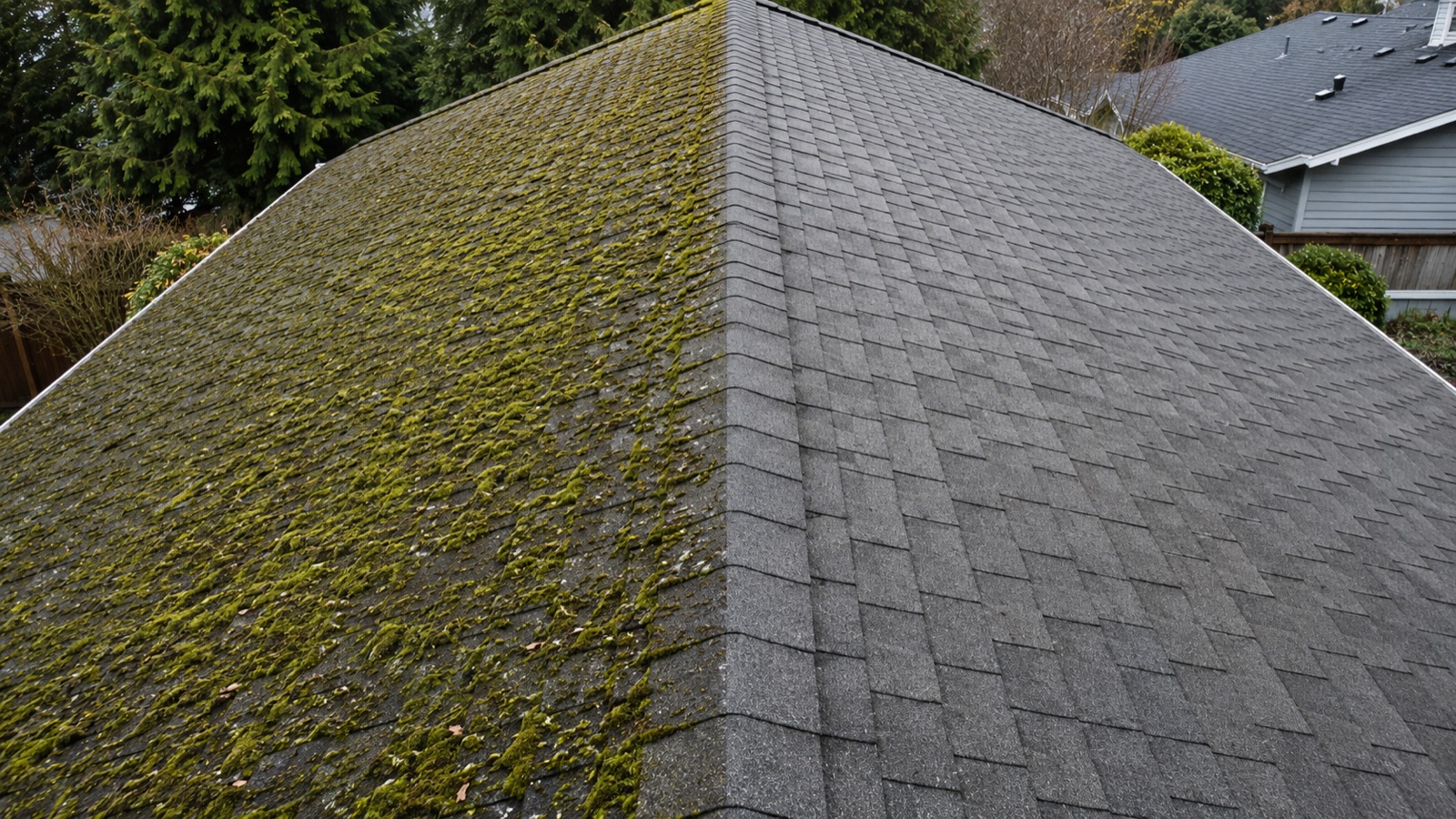
In the Pacific Northwest, the roof is usually the first part of a house to lose the fight with the climate. Long wet seasons, heavy shade, and overhanging trees give moss, algae, and lichen everything they need — and a roof is the one surface where the wrong cleaning method can cost you the roof itself. High pressure on shingles or shake doesn't just clean less; it actively shortens the life of the material.
Cascade Clean Pros is an owner-operated company serving Snohomish and King Counties. We clean roofs using a soft-wash approach — low pressure plus the right cleaning solution — because that's the method that removes the growth without tearing up the surface that's protecting your home. Every roof starts with a free on-site estimate so we can see your specific roof type, pitch, and condition before quoting.
Why high pressure is the wrong tool for a roof
It's worth being blunt about this, because it's the single most important thing to understand before you hire anyone to clean a roof.
A pressure washer running at typical pressures — 1,500 to 4,000 PSI — will physically strip the protective granules off asphalt shingles, splinter and erode cedar shake, and force water under courses and flashing. The roof may look dramatically better for a few weeks, but you've traded years of roof life for a short-term result. On shingles especially, lost granules are lost UV protection, and that accelerates aging and brittleness.
This is also where manufacturer guidance matters. Many roofing material makers specify low-pressure cleaning with approved solutions and warn that high-pressure washing can damage the product — and, in general terms, doing the wrong kind of cleaning can affect how a manufacturer views a warranty claim. We won't quote anyone's exact warranty for them (you should read your own product's documentation), but the through-line is consistent: the manufacturers point toward gentle, chemical-based cleaning, not blasting. Soft washing is how you stay on the right side of that line.
We get into the biology of why moss is so destructive — and the honest limits of DIY removal — in our guide to moss damage and your roof in the PNW.
How soft washing actually cleans a roof
Soft washing applies water at low pressure — generally under 500 PSI, roughly garden-hose force — together with a cleaning solution designed to kill and break down the living growth. The chemistry does the work. Instead of scraping moss off mechanically (and leaving its root-like rhizoids behind to regrow), the treatment kills the organism at the source so it loosens, dies back, and weathers off.
Two things make this approach durable:
- It treats the root structure, not just the green you can see. Moss anchors with rhizoids that a pressure wand can't reach; a proper solution does.
- It doesn't damage the surface, so you're not creating fresh granule loss or grain damage that invites the next colony to take hold faster.
The trade-off is patience: soft washing often continues to work over the days and weeks after we leave as the treated growth dies back and weathers away. That's normal, and it's a sign the method is doing its job rather than just hiding the problem.
Three roof types, three different approaches
"Roof cleaning" isn't one job. The material on your home decides the chemistry, the dwell time, and how we move across the surface. Here's how we handle the three roof types most common across Snohomish and King County.
1. Asphalt / composition shingles
This is the most common roof in our area — and the one most often damaged by the wrong contractor. The dark streaking you see on asphalt roofs is frequently a blue-green algae, while raised green clumps are moss taking hold in the gaps between shingles.
Our approach:
- Never high pressure. Asphalt shingles get a low-pressure soft wash only — the granule layer is non-negotiable.
- A cleaning solution matched to the growth, given proper dwell time to break down algae and kill moss at the root.
- A gentle, controlled rinse — letting the chemistry and the weather carry the dead growth off over time rather than forcing it.
- Care around flashing, valleys, and penetrations where water intrusion is a risk.
The goal is a roof that's been treated, so the regrowth clock resets — not a roof that's been scoured down to look clean today and ages faster for it.
2. Cedar shake and shingle
Cedar is beautiful and expensive, and it's the roof that suffers most from aggressive cleaning. Pressure raises and splinters the grain, and even moderate mishandling can knock years off a shake roof's life. Cedar also holds moisture, so moss and lichen dig in hard, especially under tree cover.
Our approach:
- The gentlest soft-wash treatment we offer — low pressure, with a solution and dwell time chosen for wood.
- Targeted treatment of moss and lichen so the growth dies back and releases its hold rather than being torn off.
- A controlled rinse that lifts debris without driving water into the wood or under the courses.
- Honest expectations: heavily weathered cedar won't look brand-new, but we can stop the active growth that's holding moisture against the wood and accelerating decay.
3. Standing-seam and metal roofing
Metal roofs are durable, but the factory finish (Kynar/painted coating) is the asset you're protecting, and metal panels can dent or be scratched by careless work. Algae streaking and moss still take hold on metal in shaded, debris-heavy spots, especially where panels stay damp.
Our approach:
- Low-pressure soft washing that lifts algae, mildew, and debris without abrading or scratching the coated surface.
- A solution appropriate for painted metal, with attention to runoff and the surrounding landscaping.
- Care around seams, fasteners, and panel edges so we're cleaning the finish, not compromising it.
Roof cleaning protects more than the roof
Moss and algae on the roof aren't a contained problem. Spores and runoff wash down onto the walls below, which is why so many homes show siding streaking that starts right under the eaves. If you've been fighting green on the shady side of your siding, an untreated roof above it is often the source. That's why roof cleaning and a house wash frequently go together — clean the source and the surfaces it feeds in one visit, and the whole exterior stays clean longer.
A clean roof also:
- Removes moisture-holding moss that keeps the surface wet and works its rhizoids between shingles and shakes.
- Restores reflectivity and appearance, especially the streak-free look on asphalt and metal.
- Slows the decay clock on materials that fail faster when they stay damp and colonized.
What a Cascade Clean Pros roof cleaning includes
- A free on-site estimate with a real look at your roof type, pitch, condition, and surrounding trees before any quote.
- A soft-wash treatment matched to your specific roof material — asphalt, cedar, or metal.
- Treatment of moss, algae, and lichen at the root, not just surface removal.
- Care for flashing, valleys, and penetrations, and for the plantings and surfaces below.
- An honest conversation about what to expect, including the normal die-back-over-time behavior of a soft wash.
We work on residential and commercial roofs, and we're glad to show before-and-after photos of comparable roofs so you can judge the method for yourself.
A note on safety and DIY
We're all for homeowners who want to maintain their own property, but a wet, mossy, pitched PNW roof is one of the genuinely dangerous DIY jobs — and the most common DIY mistakes (a borrowed pressure washer, or scrubbing that strips granules) do real damage. If you'd rather handle small zinc-strip maintenance yourself, great; for an actual roof cleaning, the combination of height, slope, and the soft-wash chemistry is where it makes sense to bring in someone who does it safely and correctly.
Honest, local, owner-operated
- Free, no-pressure on-site estimates — a real assessment of your roof, not a phone guess.
- Owner-operated and local to the Puget Sound region.
- Prompt follow-up on every estimate request.
- Soft-wash-first, every time, because it's the only method that's right for a roof.
- Happy to share before-and-after photos of similar roofs.
If your roof is streaking, greening, or growing visible moss, the best time to treat it is before the growth digs in for another wet season.
Roof cleaning FAQ
Will soft washing void my roof warranty? It's the opposite risk you should worry about. Many manufacturers warn against high-pressure cleaning and point toward low-pressure, solution-based methods — which is exactly what soft washing is. Read your own product's documentation for specifics, but in general the gentle approach is the one that keeps you on the right side of manufacturer guidance.
Why isn't my roof spotless the day you leave? A soft wash kills the growth and lets it die back and weather off over the following days and weeks, rather than scouring it off and damaging the surface. Some die-back happening after we leave is normal and is the method working — not a sign of an incomplete job.
Do I need my roof cleaned, or just the moss scraped off? Scraping or blasting removes what you can see but leaves the rhizoids — the root-like anchors — behind to regrow, and risks granule loss. Treating the growth at the root is what actually resets the clock.
Will it kill the moss for good? Nothing makes a PNW roof immune to moss permanently — the climate guarantees it comes back eventually. A proper treatment clears it and buys you time; keeping trees trimmed back and the roof clear of debris extends that further.
Is it safe to do this myself? A wet, mossy, pitched roof is one of the genuinely hazardous DIY jobs, and the common mistakes — a borrowed pressure washer, aggressive scrubbing — do real damage. The height, slope, and chemistry are where it makes sense to bring in someone who does it safely.
Get a free roof-cleaning estimate: call or text (360) 202-7249, or email info@cascadecleanpros.com. We serve Snohomish and King Counties and travel farther for larger residential and commercial projects — just ask.
Where we provide roof cleaning in King & Snohomish County
We serve homeowners and businesses across King and Snohomish Counties, including Lynnwood, Everett, Kirkland, and Mill Creek — plus Bothell, Woodinville, Kenmore, Redmond, Bellevue, Shoreline, and Seattle. For larger residential and commercial projects, we travel farther — just ask.